
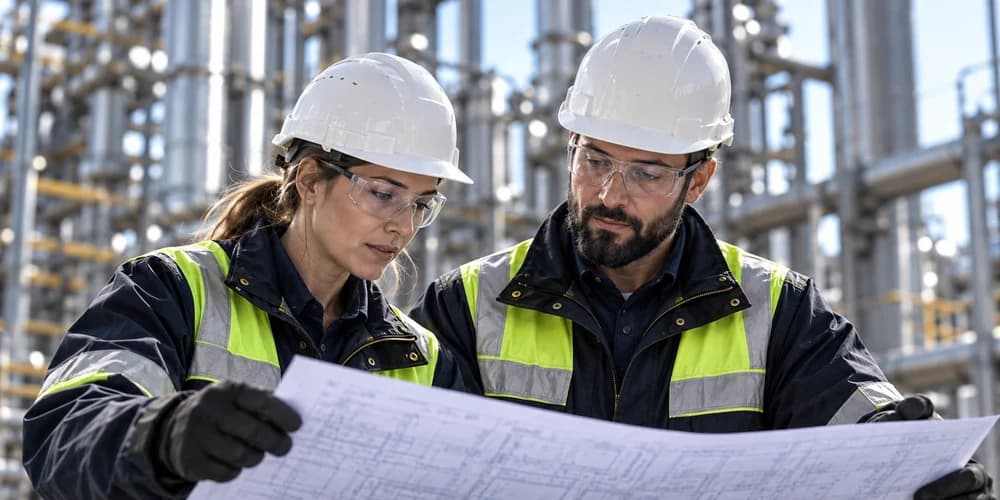
What does an industrial site manager do?
An industrial site manager organizes the teams’ daily work on site. The role covers work preparation, trade coordination and progress monitoring.
The site manager connects project objectives with practical delivery, explains priorities and reports obstacles to the project leads.
Prepare the sequence
Allocate tasks according to skills and schedule, check prerequisites and identify missing parts, documents or resources before they affect the work.
Coordinate the trades
Organize interfaces between piping, welding and assembly. Relay site instructions and resolve daily questions within the agreed decision-making scope.
Make progress clear
Track completed work, report obstacles and schedule deviations, and prepare coordination discussions with the client and other leads.
Skills and personal qualities
Technical understanding helps assess sequences and anticipate difficulties. Reading relevant documents, following schedules and explaining instructions are important skills.
Organization and communication are essential. The site manager distinguishes decisions within their authority from technical or contractual changes that need approval.
Working environment and teamwork
The role may cover an assembly phase or several stages of an industrial project. Coordination with other companies is part of the work.
Site management, supervision, quality and HSE work together. Where a supervisor is also present, the site manager focuses on daily team organization while supervision follows work packages and interfaces within the agreed scope.
Training and career development
Experience in industrial trades builds an understanding of operations and team needs. Moving into coordination develops planning, instruction delivery and progress tracking.
Further experience and training can lead to larger teams, several work packages or broader supervision and construction management responsibilities.