
Understand
Coordinated movement.A controlled process.
The process explained, from principle to preparation.
In this guide
Mechanisation options
Welding mechanisation stabilises movement, improves repeatability and controls cycle parameters. From simple torch travel to a fully automated installation, different levels of mechanisation can be considered according to part geometry, production volume and quality requirements.
The main mechanisation solutions
Mechanised TIG
Torch movement is provided by a carriage, welding bench, positioner or robotic system. Wire feeding can remain manual or be automated. This setup is particularly suited to joints requiring precision, weld pool control and excellent finish quality.
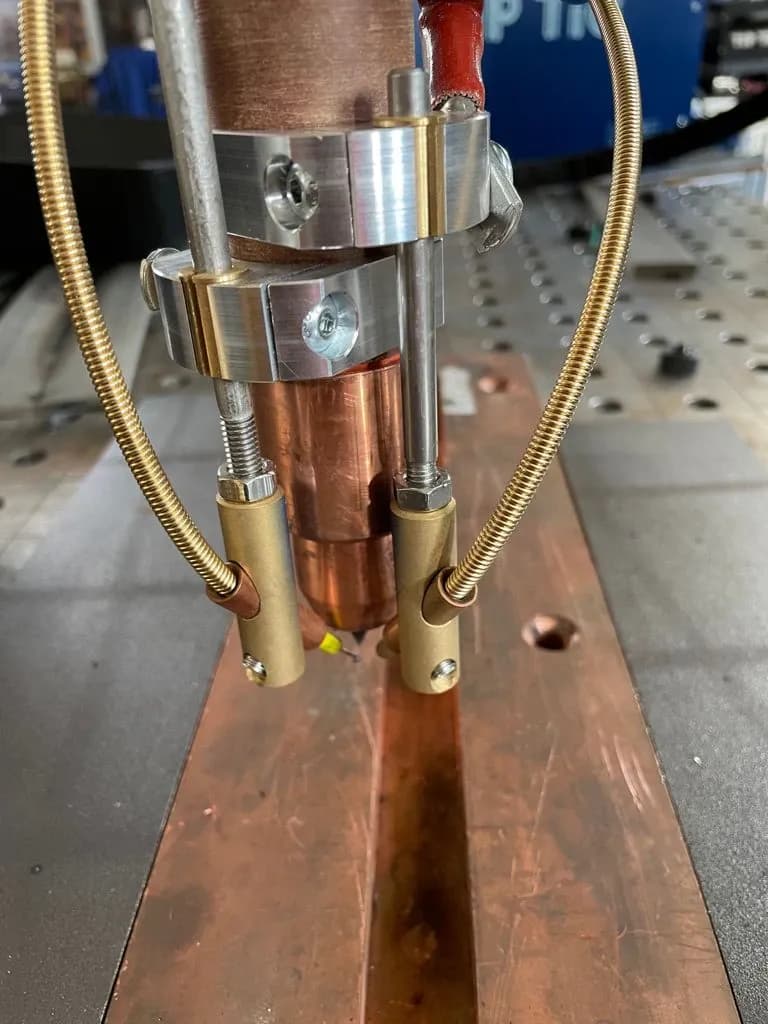
Mechanised TIP TIG
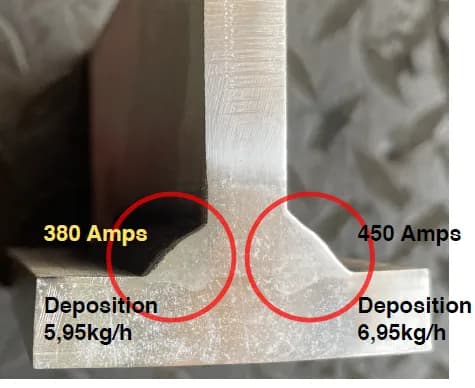
TIP TIG combines mechanical wire movement with mechanised torch travel. This combination can improve consistency and productivity, especially with hot wire. It can be integrated into travel equipment, benches or dedicated installations.
Mechanised MIG/MAG
MIG/MAG is naturally suited to mechanisation thanks to continuous wire feeding. The torch can be moved by a carriage, bench, positioner or robot. This solution is particularly useful when productivity and deposition rates are priorities.
Automation and robotics
For repetitive production or well-controlled geometries, mechanisation can evolve into an automated or robotic installation. Travel, wire feeding and the main welding parameters are then controlled through a defined cycle.
When should you choose mechanisation?
Mechanisation is particularly relevant when repeatability matters: long welds, series production, thick sections, traceability requirements or productivity goals.
The choice between TIG, TIP TIG and MIG/MAG depends on factors including material, thickness, joint preparation, welding position, accessibility and the required quality level.
There is no single solution: the right level of mechanisation is the one that meets the actual needs of the application.
Preparing your project
To assess a mechanisation solution, please provide drawings or parts where possible, together with materials, thicknesses, joint preparations, weld lengths, positions and production objectives.
We can then define the most suitable process, the level of mechanisation required and the associated equipment: power source, torch, wire feed, carriage or bench, positioner, control and parameter monitoring.
The assessment can be supplemented by trials on parts or test pieces to validate the setup before production deployment.
From workshop to site
From processto project.
Let’s review your joint to identify the right equipment and skills.
Let’s discuss your jointPeople & teams
The skills to put it into practice.
Define the work and required qualifications. We assess the professional profiles and supervision your project needs.
In practice
Questions before you start.
Which process should be mechanised?
Choose TIG, TIP TIG or MIG/MAG according to material, geometry, access and required quality.
How can I have my requirements assessed?
Send drawings or dimensions, materials, location and proposed dates. Tell us whether you need equipment to buy, professionals or an intervention combining equipment and crew.